Why Training for Accuracy Matters
As a world leader in pressure point fighting, a 7th Dan in Karate Jutsu, and a National Boxing Coach for Cambodia, I’ve spent decades honing the art of combat into a science.
I’ve trained fighters, law enforcement officers, and martial artists across the globe - earning accolades like Instructor of the Year in the Martial Arts Hall of Fame (2000) and induction into the Combat Hall of Fame (2001).
Yet, despite my credentials and the countless hours I’ve logged in training halls, I still see the same fundamental mistake repeated over and over again, even by top-level practitioners: a lack of focus on accuracy.
If you’re serious about martial arts, self-defense, or pressure point fighting - and I know you are, because you’re reading this - then it’s time to rethink how you train.
Accuracy isn’t just a detail; it’s the foundation of everything I teach.
Let me explain why it matters, why most people get it wrong, and how my methods can transform your training - and your results.
The Heavy Bag Fallacy: Hitting Without Purpose
Walk into any gym, dojo, or training facility, and you’ll see it: people pounding away at the heavy bag with all the enthusiasm of a jackhammer and none of the precision of a surgeon.
Even top-level boxers - men and women who should know better - fall into this trap. They swing, they strike, they sweat, but they’re not aiming for anything specific.
The bag becomes a canvas for brute force, not a tool for skill.
I’ve watched fighters unleash flurries of punches that look impressive to the untrained eye, yet when I ask, “What exactly were you hitting?” they hesitate. “The bag,” they say, as if that’s enough. It isn’t.
The heavy bag isn’t there to absorb your aggression; it’s there to teach you control.
If you’re not aiming for a precise target - say, the GB20 point at the base of the skull, or the ST4 below the cheekbone, as I outlined in my previous article on critical targets - you’re wasting your time.
You’re conditioning yourself to be sloppy, to rely on power over placement.
In a real fight, that won’t cut it.
The human body isn’t a heavy bag; it’s a complex system of vulnerabilities, and if you can’t hit those vulnerabilities with pinpoint accuracy, you’re leaving your survival to chance.
My method demands more. Start treating every strike as an exercise in precision. Mark a spot on the bag - an inch-wide circle - and hit it, every single time.
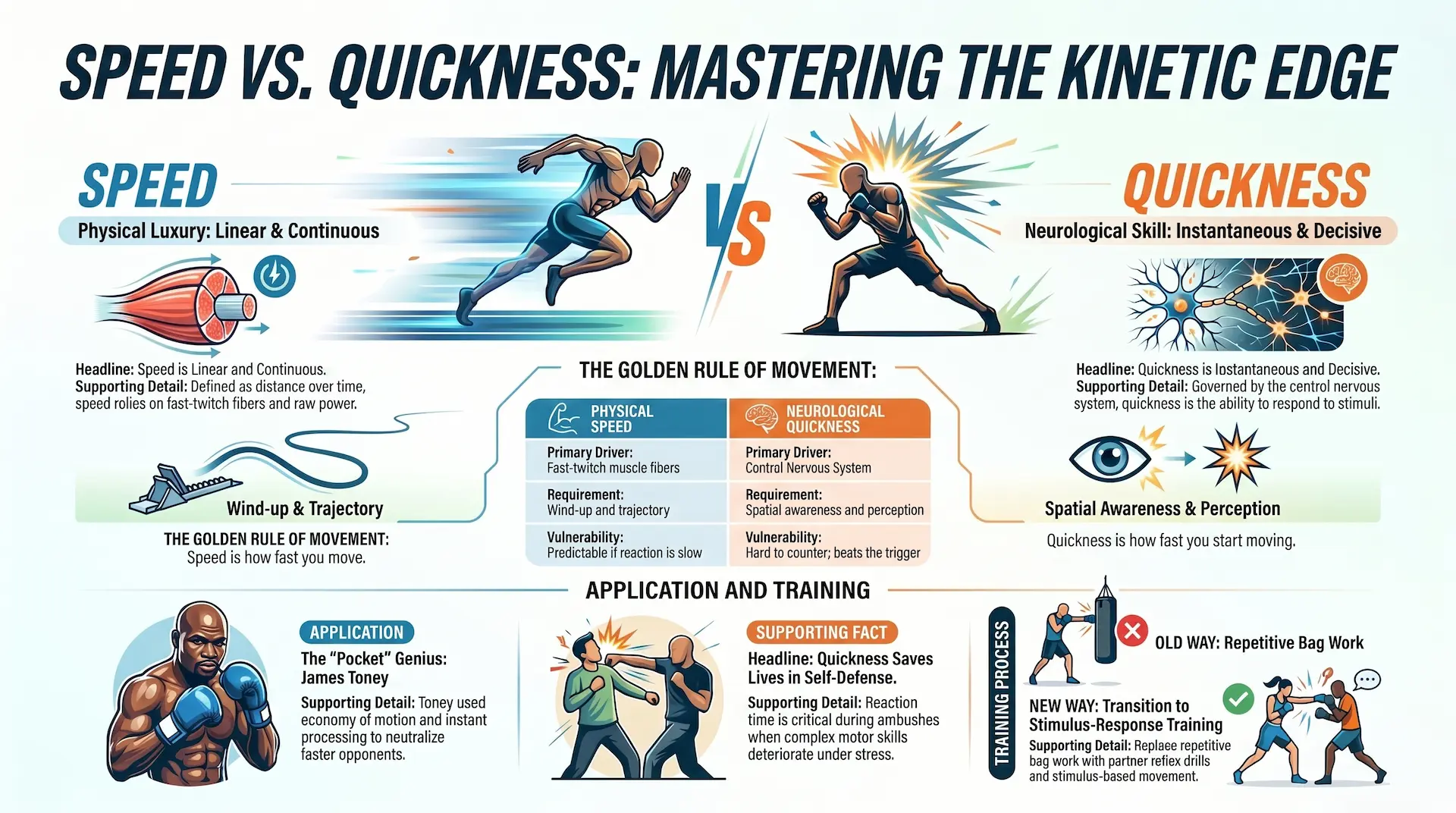
Slow down if you must, but don’t sacrifice accuracy for speed. Speed comes later; accuracy comes first.
Padwork Pitfalls: The Compliance Conundrum
Now let’s talk about padwork, another area where I see rampant errors - even among seasoned martial artists.
Too often, the pad holder becomes a compliant partner, drifting the pads to meet the punches rather than providing a static, challenging target.
I’ve seen it in dojos, boxing gyms, and even my own seminars before I step in to correct it.
The striker throws a jab, and the pad holder shifts the focus mitt to catch it, rewarding mediocrity instead of demanding excellence.
This isn’t training; it’s choreography.
In my Open Circle Fighting Method and Pressure Point Defensive Tactics systems, I teach a different approach.
The pad holder’s job isn’t to make you feel good - it’s to make you better.
The pads should be held steady, positioned at precise angles that mimic real anatomical targets: the ST25 point on the abdomen, for instance, or the GB20 at the base of the skull. Your task is to hit that target, not to expect it to come to you.
Start with larger pads if you’re new to this, but as you progress, shrink the target.
Move to smaller mitts, then to finger pads, then - when you’re ready - to a single knuckle held aloft.
If you can’t land your strike dead-center every time, you’re not ready to move on.
This is how I train my students, from Cambodia’s national boxing team to law enforcement officers in my Cop Tactics courses.
It’s not easy, but it’s effective.
Stop letting your pad holder compensate for your lack of accuracy. Demand more of yourself.
Drilling Down: Smaller Targets, Bigger Results
When it comes to drilling, the principle is the same: aim small, miss small.
Most martial artists drill with vague intentions - “hit the head,” “strike the body” - and call it a day. That’s not good enough.
In my previous articles, I introduced you to specific pressure points rooted in Chinese medicine - GB20, ST4, ST25 - and explained why they’re game-changers in a fight.
Now, I’m telling you how to hit them consistently, every single time.
Start slow. Take a partner or a dummy and mark the GB20 point - at the base of the skull, just behind the ear.
Throw your strike deliberately, focusing on form and placement over power or speed. Land it perfectly ten times, then twenty, then fifty.
Once you can do that without thinking, pick up the pace. Move to ST4, under the cheekbone, and repeat the process.
Then ST25, on the lower abdomen. Each time, shrink the target in your mind’s eye - from a fist-sized area to a dime-sized point.
This is how I’ve built my reputation as the world’s leading authority on pressure point fighting: relentless, methodical precision.
Here’s the key: no compliance. Your partner shouldn’t lean into the strike or adjust their position to help you.
In a real encounter, your opponent won’t cooperate - they’ll move, they’ll resist, they’ll fight back. Train like that matters.
Build the muscle memory to hit what you’re aiming at, no matter the circumstances. Speed and power will follow naturally, but only if accuracy leads the way.
My methods work because they mirror reality, not gym fantasies.
Why My Methods Work Best
You might be wondering: why should I listen to Russell Stutely over the countless other instructors out there? The answer lies in my track record and my philosophy.
I’m not just a 7th Dan in Karate Jutsu or a 6th Dan in Shotokan - I’m a practitioner who’s distilled decades of experience into systems that deliver results.
My Open Circle Fighting Method and Pressure Point Defensive Tactics aren’t theories; they’re proven frameworks trusted by fighters, coaches, and even military personnel worldwide.
When I tell you to train for accuracy, it’s not a suggestion - it’s a mandate backed by years of trial, error, and success.
Most training methods prioritize flash over substance: big punches, loud kiais, and sweaty exhaustion.
Mine prioritize effectiveness.
Hitting a heavy bag aimlessly won’t stop an attacker. Sloppy padwork won’t save your life. Vague drills won’t exploit an opponent’s weaknesses.
But my approach - starting slow, building to fast, and always aiming for smaller, precise targets - will.
I’ve seen it work for boxers in Cambodia, for karateka in my seminars, and for men just like you: over 40, passionate about martial arts, and determined to master self-defense. You’ve already read my articles on correct striking and critical targets. Now, I’m giving you the how - and the why - to tie it all together.
The Call to Change
If you’re still training without accuracy as your cornerstone, it’s time to stop.
You’re not just wasting effort - you’re ingraining habits that could fail you when it matters most. I’ve spent my life studying the human body’s pressure points, refining striking techniques, and teaching men how to protect themselves and others. I’ve earned my stripes - 7th Dan, 4th Dan in Ryukyu Kempo, Master Instructor in Cop Tactics - and I’m telling you: accuracy is non-negotiable.
Start today. Mark a target on your heavy bag and hit it, not the bag itself.
Tell your pad holder to hold steady and challenge you, not coddle you. Drill those points - GB20, ST4, ST25 - until you can strike them blindfolded.
Slow down, focus, and build up to full speed with no shortcuts. This is how I train champions. This is how I train survivors. This is how you should train, too.
You’re over 40, and you’ve got the drive to be better - to master martial arts and self-defense at a level most can only dream of. I respect that.
Now, let’s make it happen.
Train for accuracy, train my way, and watch how it changes everything.