Speed vs. Quickness
The Difference That Wins Fights
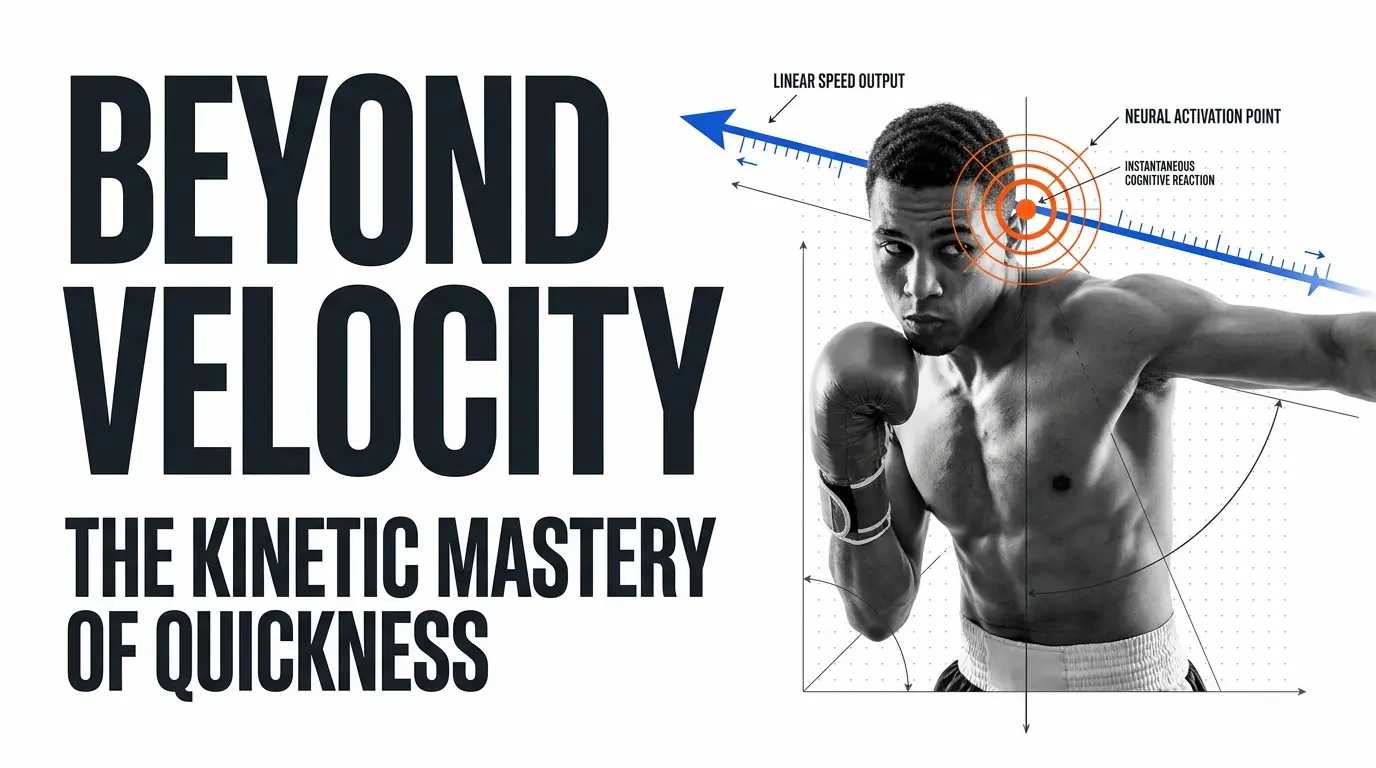
Elite coaches don't talk about who's fastest. They talk about who's quickest — and there's a profound, biomechanical difference that separates a flashy amateur from a masterful professional.
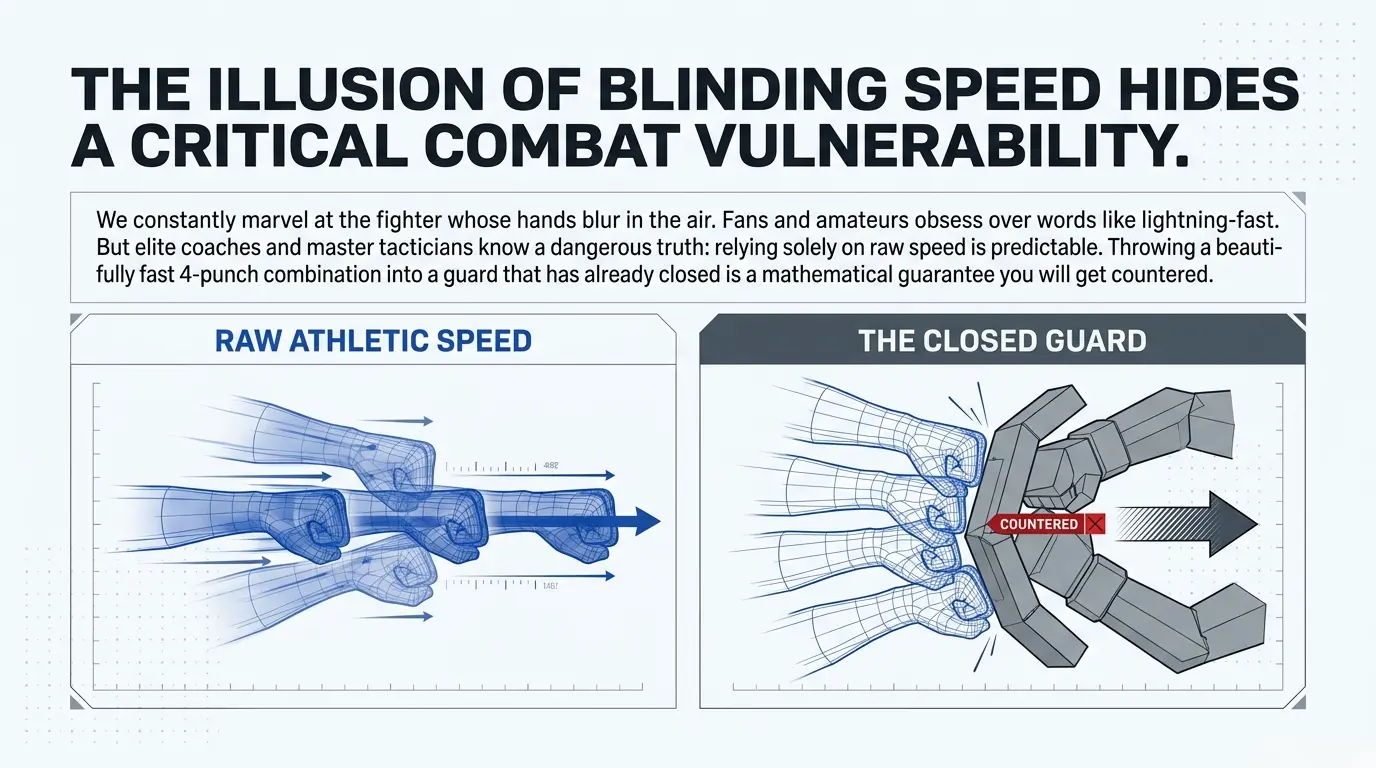
If you ask the average sports fan to describe a world-class fighter, words like "lightning-fast" and "blinding speed" get thrown around constantly. We marvel at the fighter whose hands blur in the air.
But if you talk to elite coaches, master tacticians, or self-defence experts, they will tell you that raw speed is only half the battle. In fact, relying solely on speed can get you knocked out.
The Biomechanics
To understand why this matters in a fight, we have to look at how these two traits operate differently in the human body.
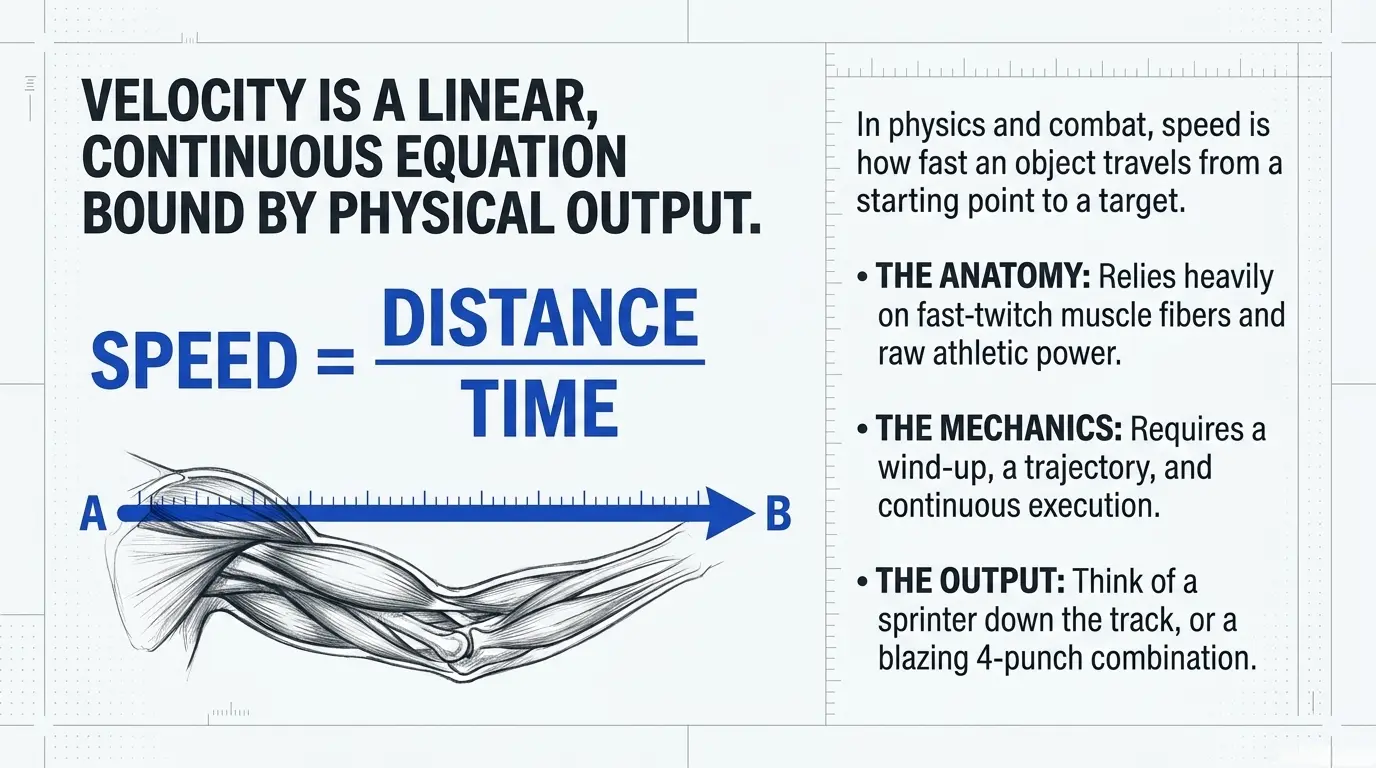
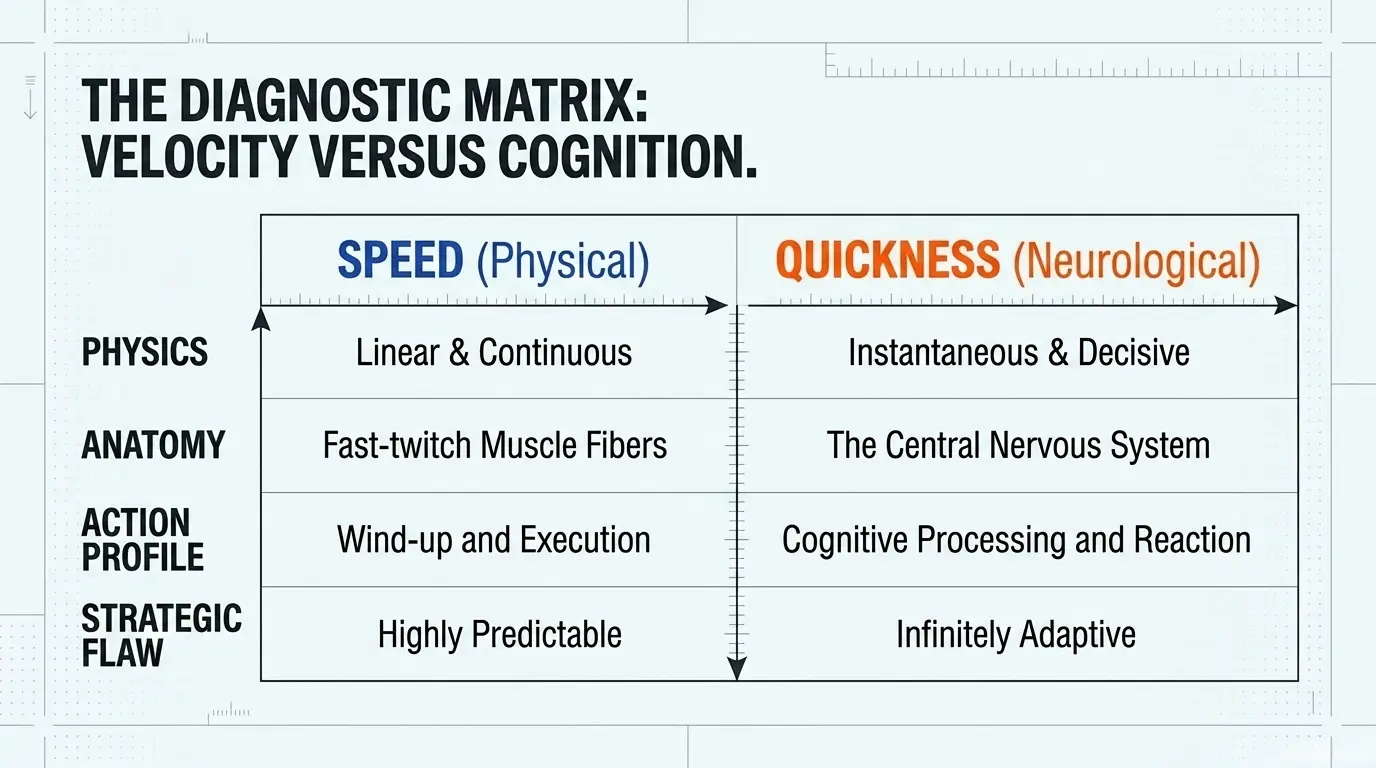
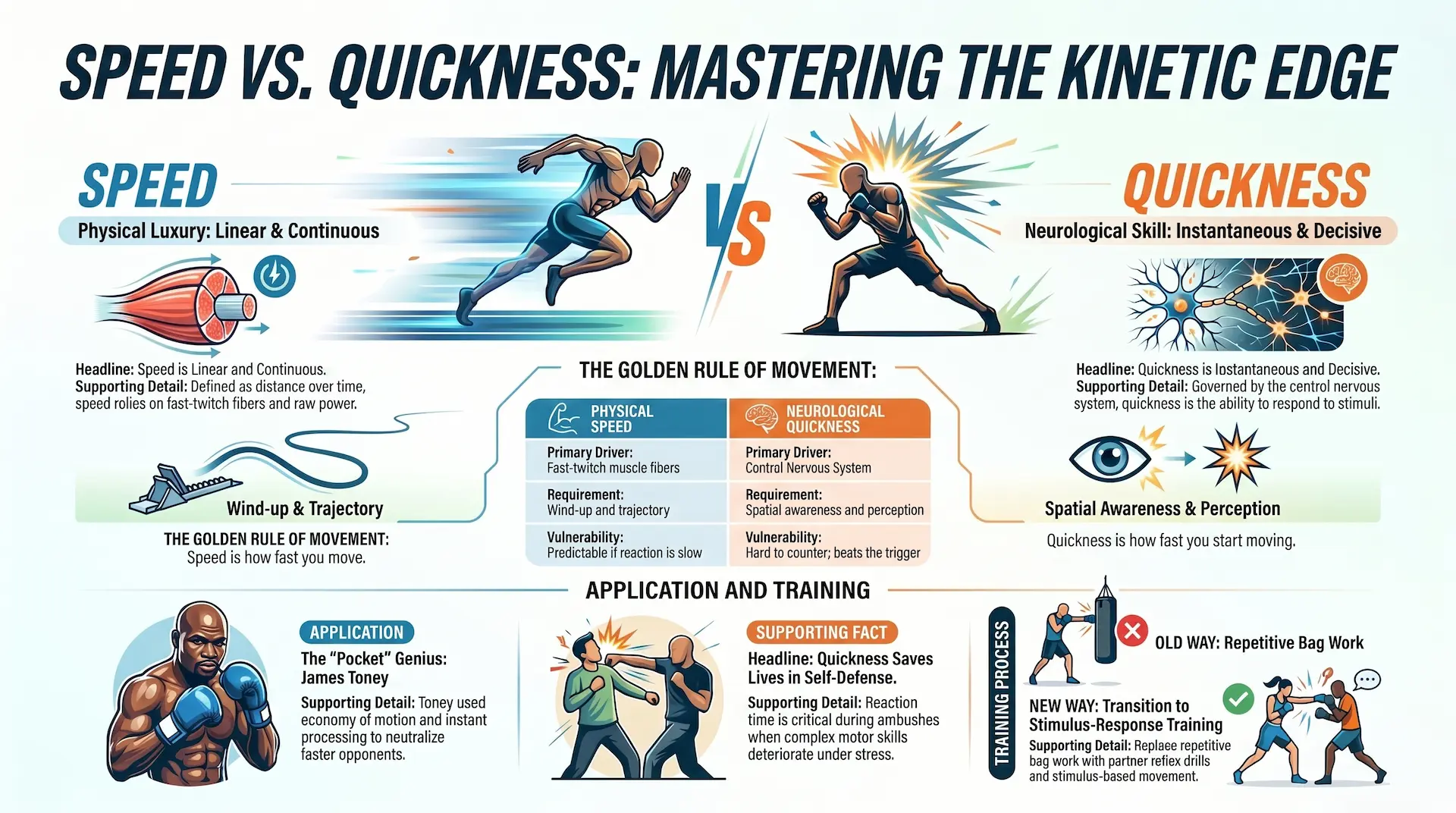
Linear and continuous. Distance divided by time. How fast an object travels from Point A to Point B. Relies on fast-twitch muscle fibres and raw athletic power. Requires a wind-up, a trajectory, and execution.
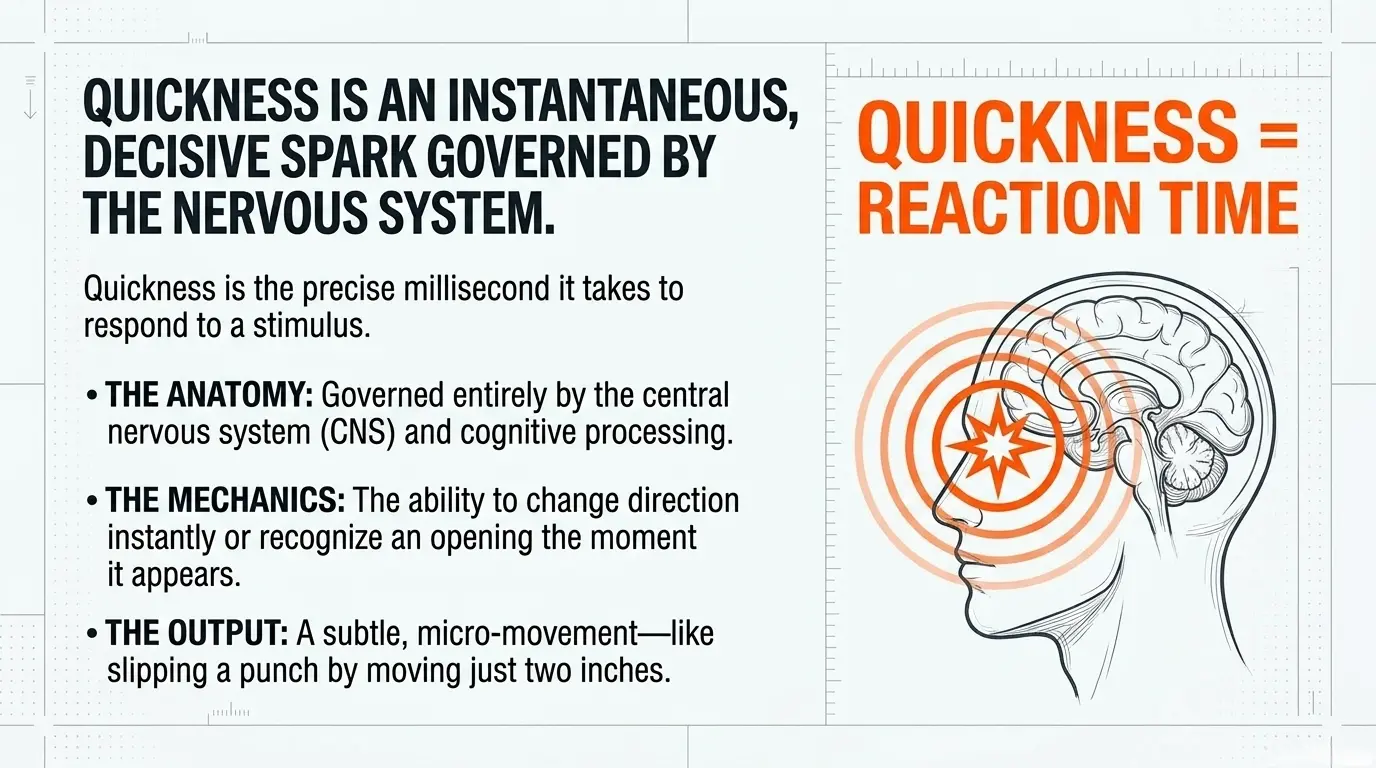
Instantaneous and decisive. The time it takes to respond to a stimulus. Governed by the central nervous system, spatial awareness, and cognitive processing. The ability to change direction — instantly.
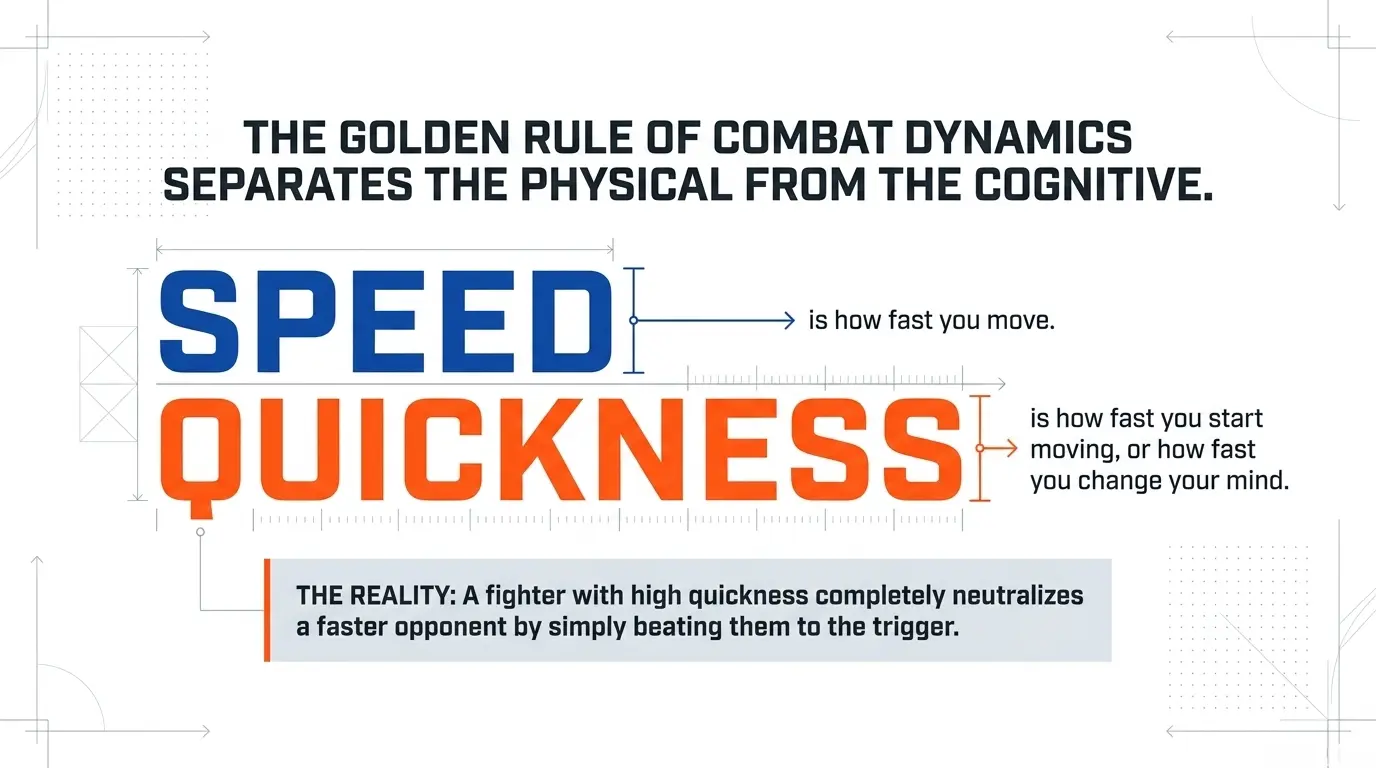
Speed is how fast you move. Quickness is how fast you start moving — or how fast you change your mind.
If a fighter has incredible speed but zero quickness, they are predictable. They will throw beautifully fast punches into a guard that has already closed, or they will get countered because their reaction time is slow.
Conversely, a fighter with high quickness can completely neutralise a faster opponent by simply beating them to the trigger.
The Anatomy of a Counter-Punch
Imagine a standard jab-and-counter scenario:
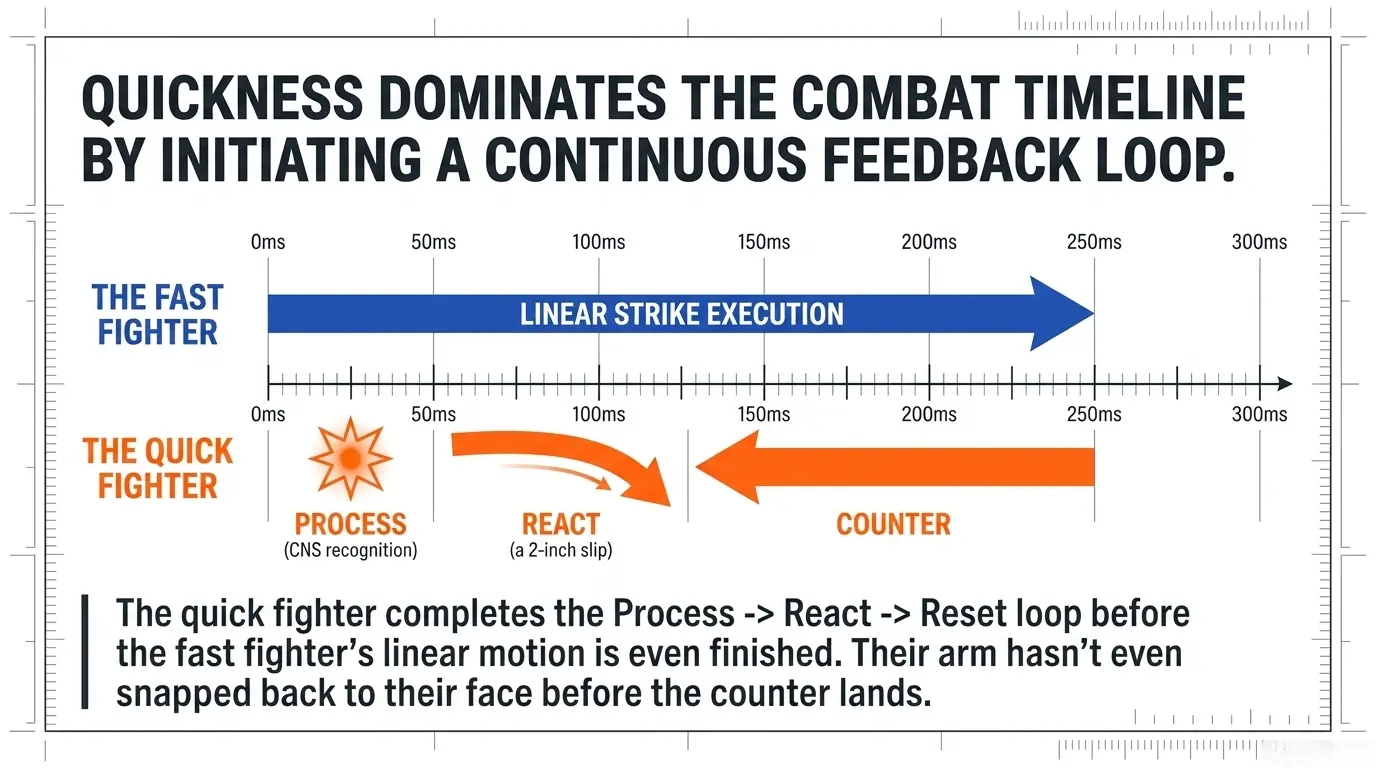
The Fast Fighter
Sees an opening and launches a heavy right hand. The punch travels at incredible speed — raw power behind every inch of that motion.
The Quick Fighter
Doesn't try to out-race that punch with raw speed. Instead, their central nervous system registers the twitch of the opponent's shoulder. With a micro-movement — a two-inch slip of the head — the punch sails harmlessly past. The quick fighter has processed, reacted, and reset before the fast fighter's arm can even snap back to guard.
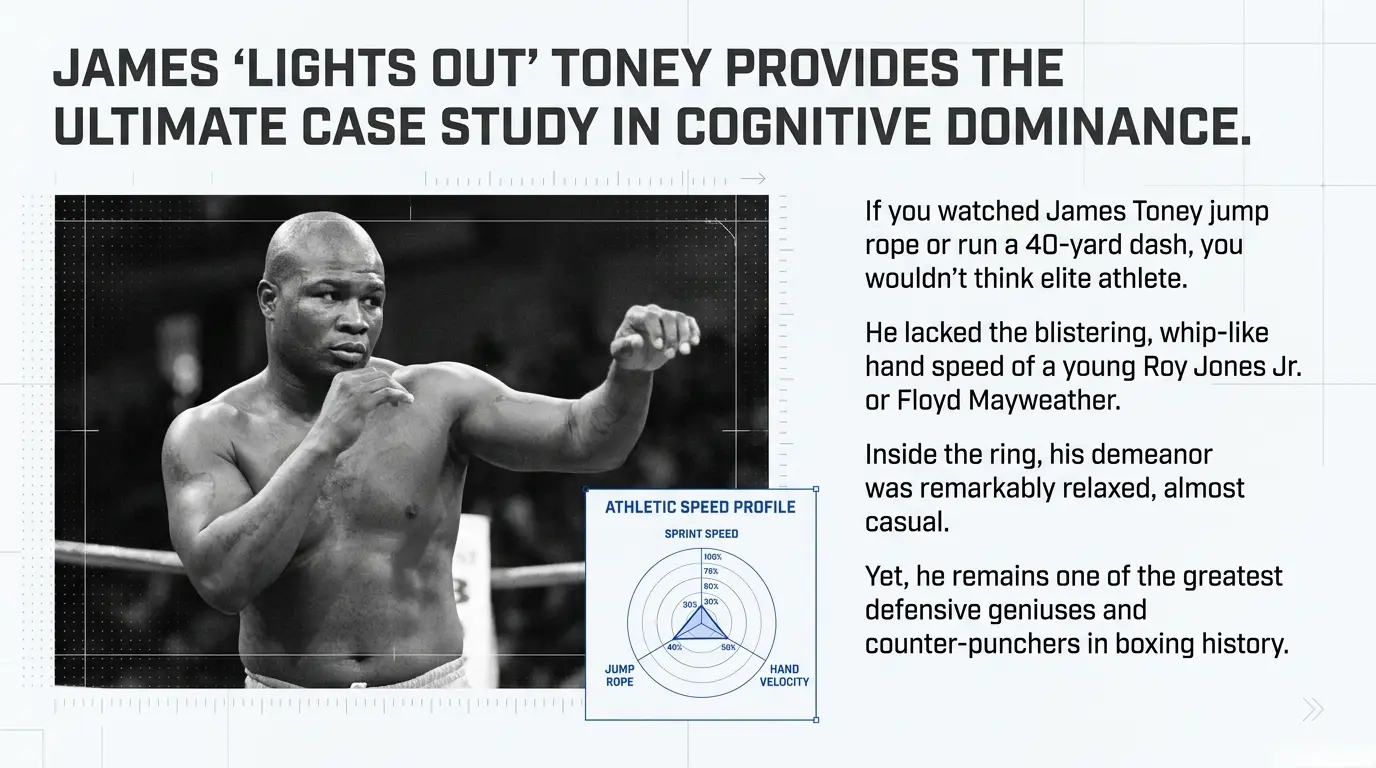
James "Lights Out" Toney
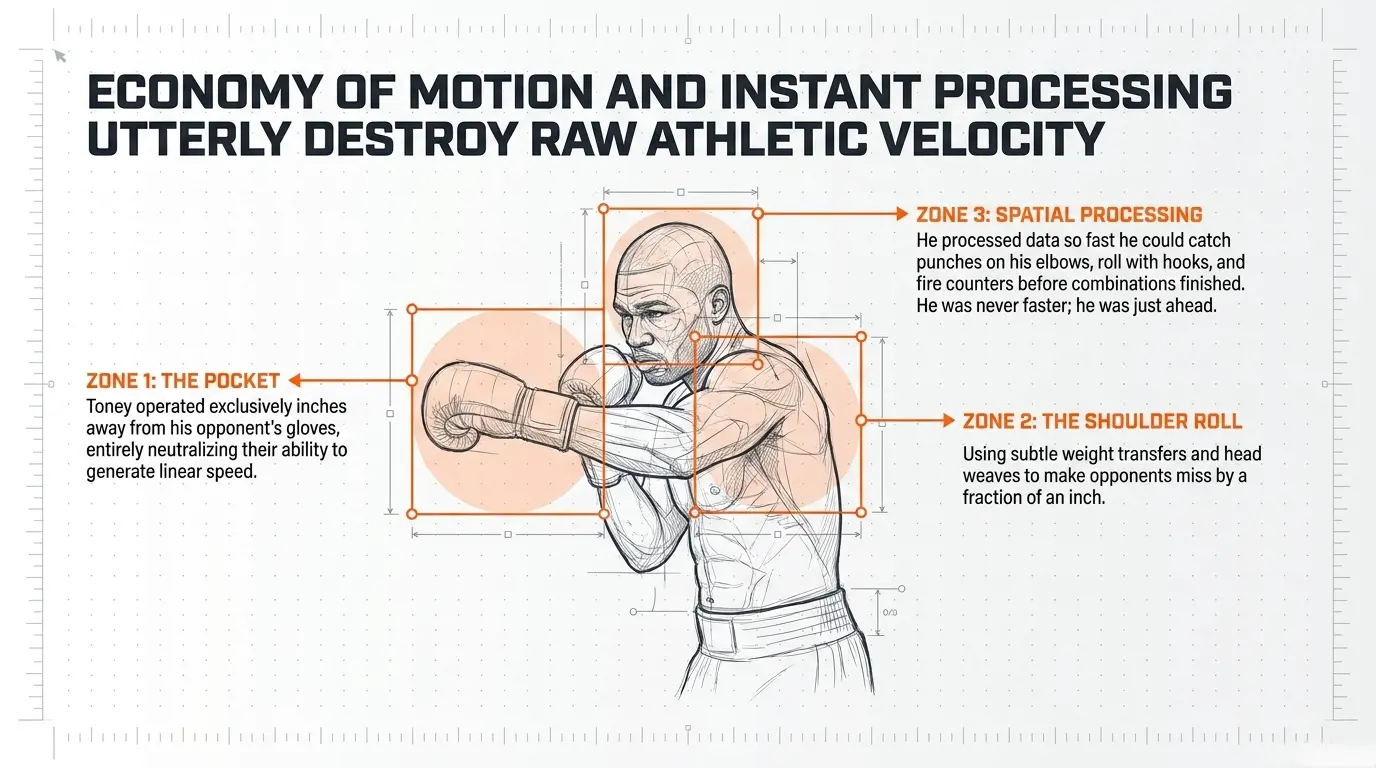
Toney didn't have the blistering hand speed of a young Roy Jones Jr. or Floyd Mayweather. He often looked relaxed — almost casual — inside the ring. Yet he is widely considered one of the greatest defensive geniuses and counter-punchers in boxing history. His cognitive quickness and spatial awareness were simply unmatched. He operated in the pocket, used the shoulder roll, subtle weight transfers, and head weaves to make opponents miss by a fraction of an inch. He wasn't faster than his opponents — he was ahead of them.
Self-Defence: Why Quickness Saves Lives
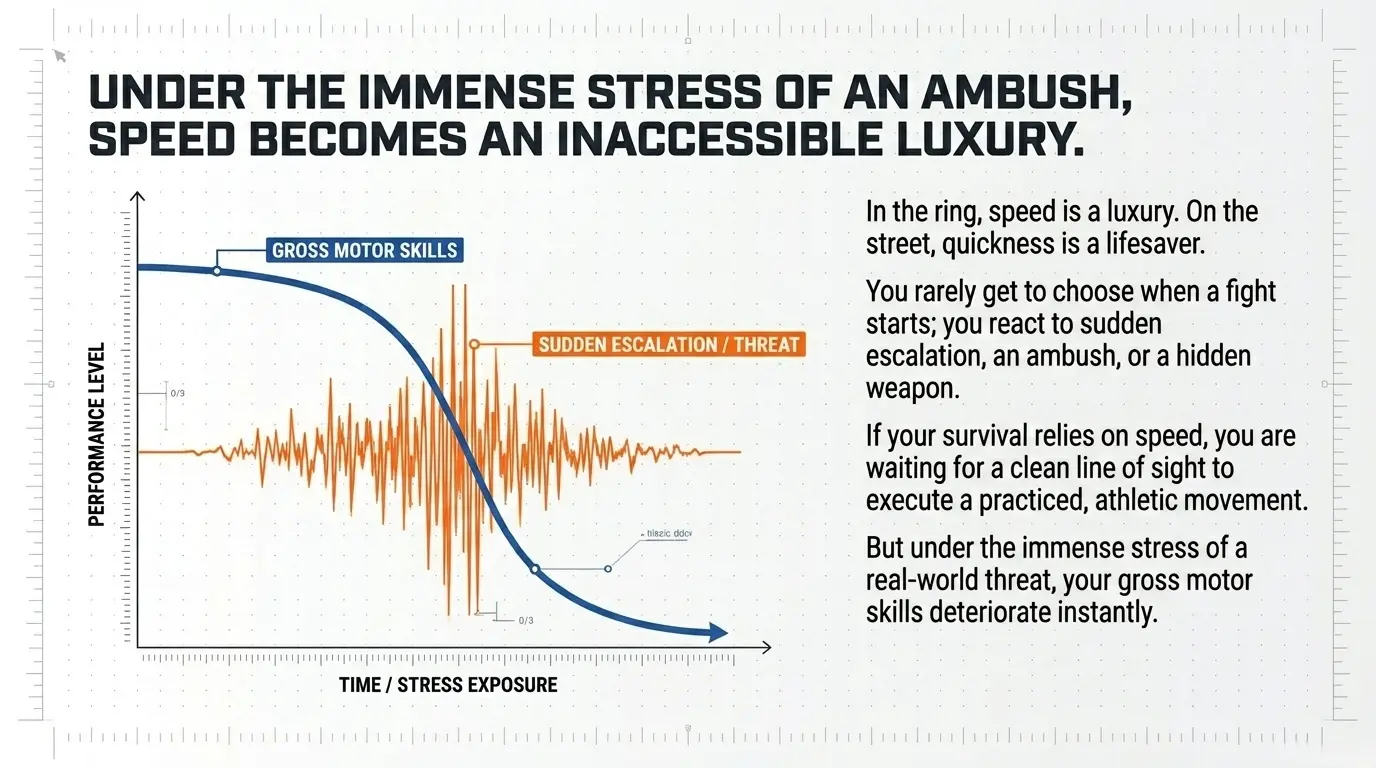
While speed is a luxury in the ring, quickness is a literal lifesaver on the street. In a self-defence situation, you rarely get to choose when the fight starts. You are reacting to an ambush, a sudden escalation, or a hidden weapon.
If you rely on speed, you are waiting for a clean line of sight to execute a practiced, athletic movement. But under the immense stress of a real-world threat, your gross motor skills deteriorate rapidly.
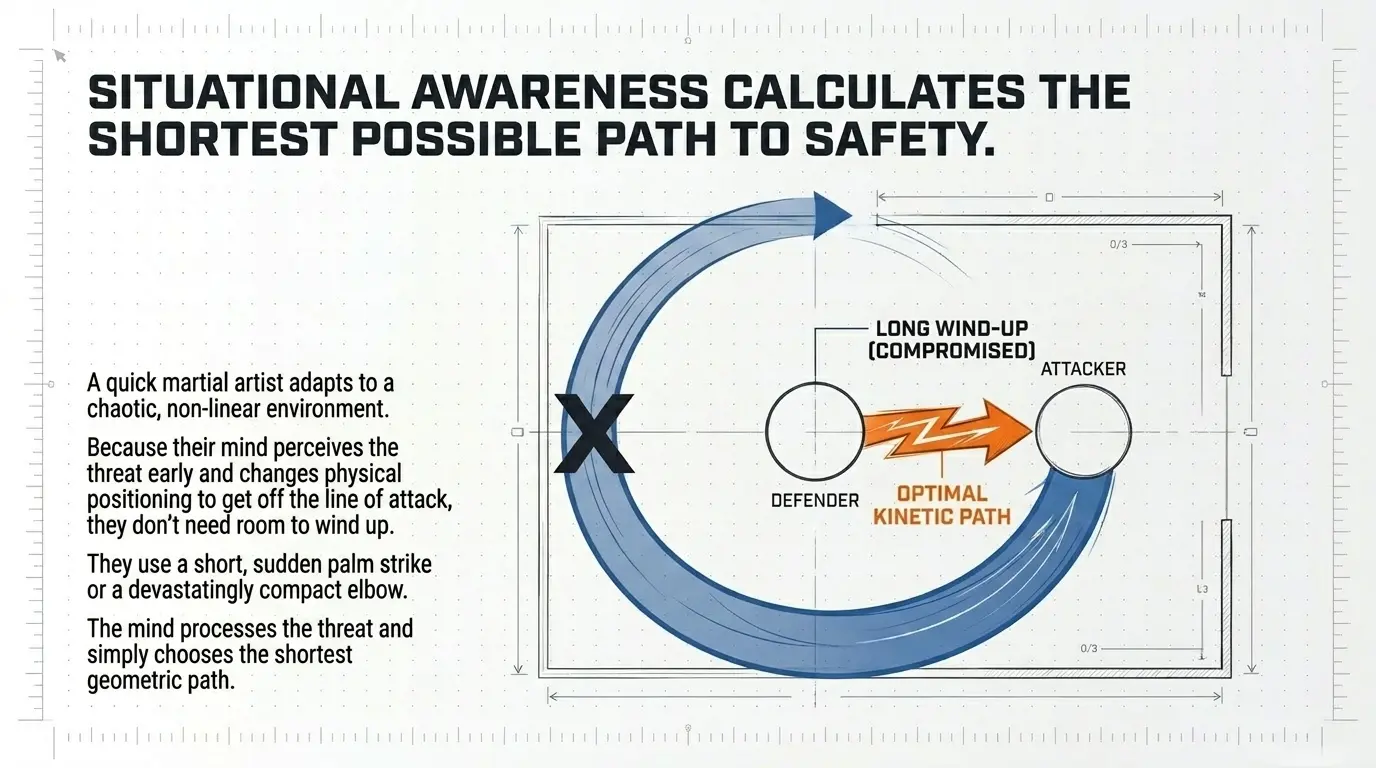
Quickness is what matters here. The ability to perceive a threat early, immediately change your physical positioning to get off the line of attack, and adapt to a chaotic, non-linear environment. A quick martial artist doesn't need room to wind up a fast kick — they use a short, sudden palm strike or a devastatingly compact elbow because their mind already chose the shortest path to safety.
The Takeaway For Your Training
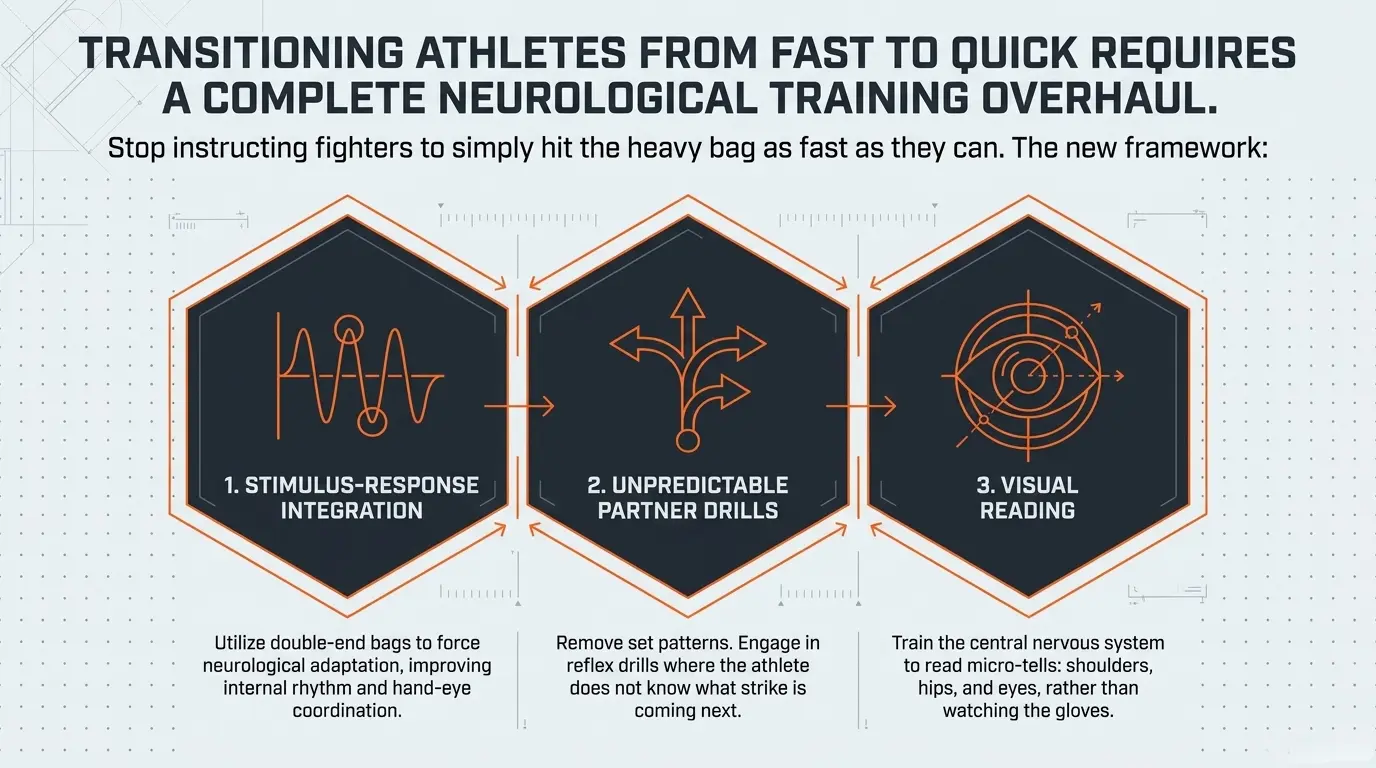
If you want to transition from a fast athlete to a quick fighter, you need to change how you train. Stop just hitting the heavy bag as fast as you can.
- Incorporate stimulus-response drills where you don't know what's coming next
- Use the double-end bag to improve rhythm and hand-eye coordination
- Spend time on partner reflex drills — randomise the stimulus
- Train your mind to read shoulders, hips, and eyes — not just hands
- Drill micro-movements: slips, tilts, and weight shifts, not just blocks
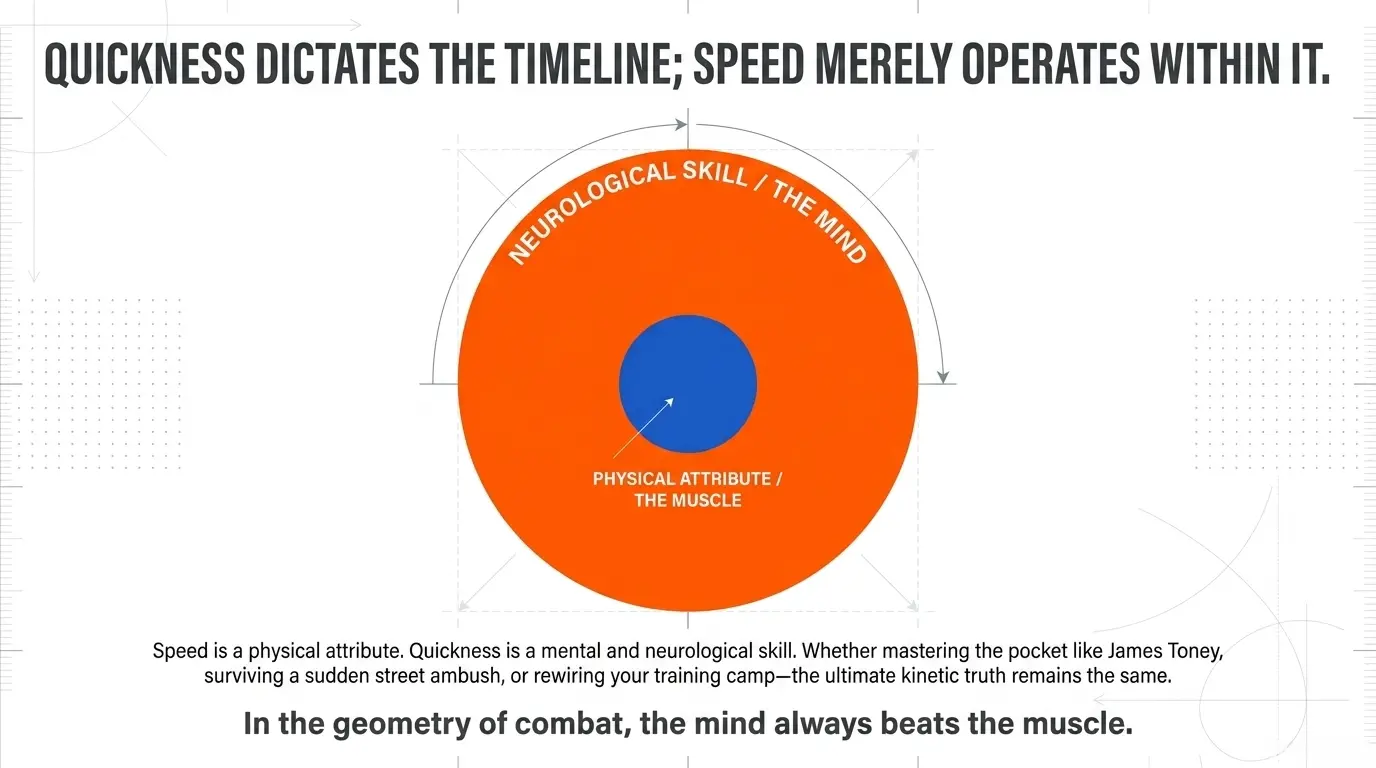
Quickness is a mental and neurological skill.
In combat — the mind always beats the muscle.