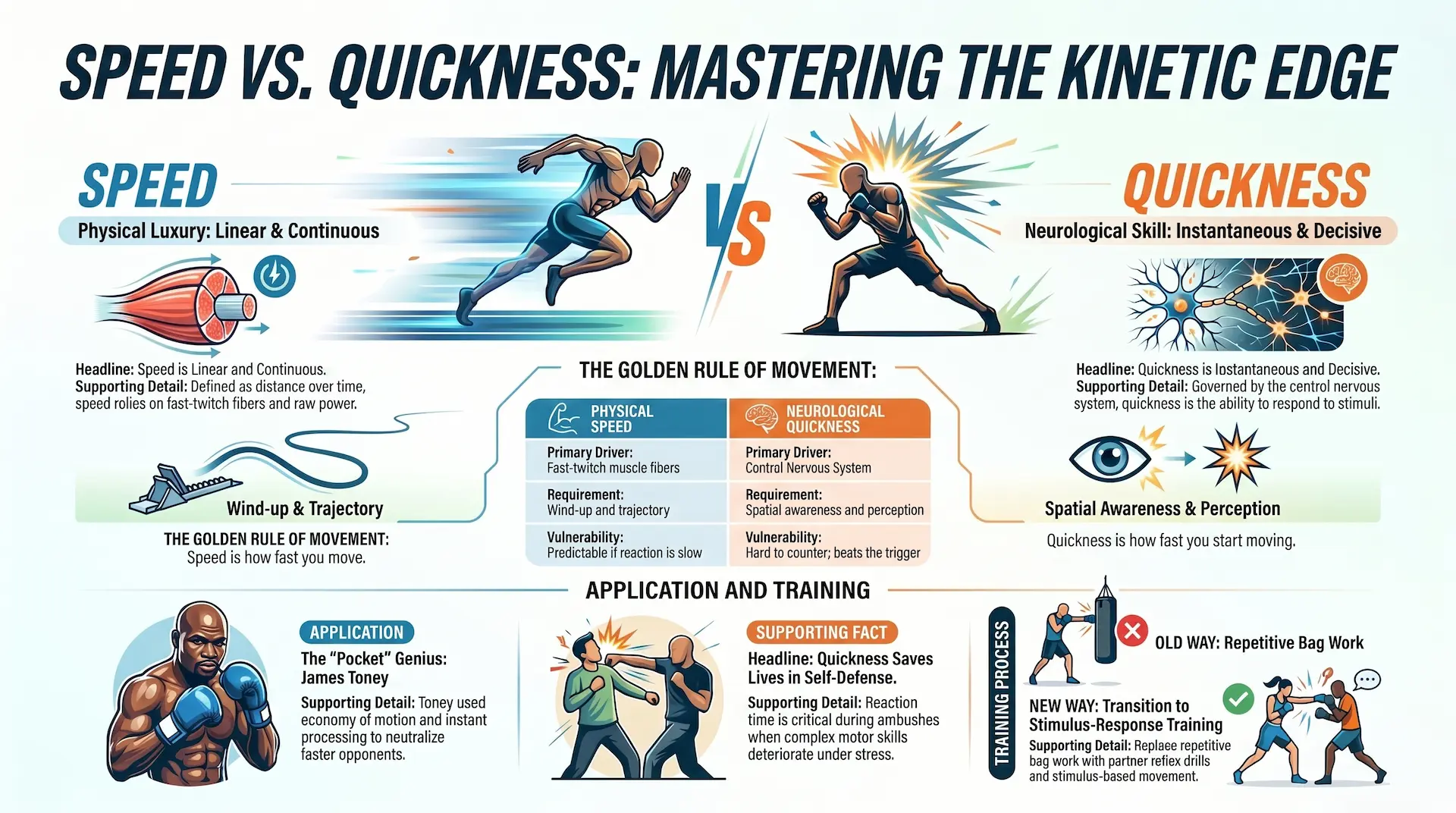
Training for Movement and Defense: Staying Ready to Strike
When it comes to martial arts and self-defense, the ability to move effectively, evade danger, and maintain a position of control is non-negotiable.
As someone who’s spent decades refining combat systems—earning accolades like Martial Arts Hall of Fame Instructor of the Year (2000) and a Combat Hall of Fame induction (2001)—I’ve seen firsthand how proper movement can turn the tide in any confrontation.
Whether you’re a seasoned martial artist or a man over 40 looking to sharpen your self-defense skills, training your body to flow between defense and offense is a game-changer.
In my years as a National Boxing Coach in Cambodia, an International Instructor for Pressure Point Defensive Tactics, and a 7th Dan in Karate Jutsu, I’ve developed a series of drills that blend footwork, evasion, and readiness to strike.
These drills aren’t about brute force or youthful agility—they’re about smart, deliberate movement that anyone can master with practice.
Best of all, they’re structured in boxing round times (typically 3 minutes), making them accessible yet challenging. Let’s dive into how you can train your movement and defense while keeping your attack options wide open.
The Philosophy: Your Partner Is Your Ally
Before we get into the drills, let’s establish a key principle: your training partner isn’t your enemy. In my Open Circle Fighting Method and Cop Tactics systems, I emphasize that the partner’s role is to help, not to dominate or “beat” you. They’re there to guide, talk you through the process, and provide feedback in real time. This collaborative approach builds trust, hones your skills, and ensures you’re refining technique rather than just surviving a sparring session. At the end of each round, you’ll sit down together, discuss what worked, what didn’t, and how to improve next time. This reflective process is gold—it’s how you turn good habits into great ones.
The Drills: Movement, Defense, and Readiness
These drills are designed to sharpen your footwork, enhance your evasion, and keep you poised to counterattack. They’re scalable—whether you’re a beginner or a black belt—and they tap into the principles of pressure point fighting and self-defense that I’ve taught worldwide. Each drill lasts a boxing round (3 minutes), and your partner controls the pace and intensity to suit your level. Here’s the breakdown:
Drill 1: Hands Down – Footwork Focus
• Setup: Hands relaxed by your sides, partner moves at a slow-to-medium pace around the ring.
• Goal: Maintain distance using footwork alone—no blocking, no striking, just movement.
• Why It Works: With your hands down, you’re forced to rely on your legs and torso to stay out of range. This builds spatial awareness and teaches you to use the entire ring, a skill that’s critical in real-world self-defense. For men over 40, this is also a low-impact way to improve coordination and stamina without taxing your joints.
Drill 2: Hands Up – Footwork Focus
• Setup: Same as Drill 1, but now your hands are in a guard position.
• Goal: Keep moving, maintain distance, and get comfortable with a defensive posture.
• Why It Works: Raising your hands shifts your mindset to defense while still emphasizing footwork. It’s a natural progression that prepares you for incoming strikes without breaking the flow of movement. Plus, it reinforces the habit of keeping your guard up—a must for any martial artist.
Drill 3: Hands Down – Jab Evasion
• Setup: Hands down, partner throws a light jab at a controlled pace.
• Goal: Evade using head movement (slipping, ducking, weaving) and footwork. No blocking allowed.
• Why It Works: This drill sharpens your reflexes and trains you to read an opponent’s intent. The jab is the most common strike in combat, so mastering evasion here sets you up for success against more complex attacks. It’s also a fantastic workout for your neck and core—key areas for stability as you age.
Drill 4: Hands Up – Jab Evasion
• Setup: Hands in guard, partner throws a light jab.
• Goal: Same evasion techniques, but now with the option to counter if the opportunity arises.
• Why It Works: With your hands up, you’re in a position to block or strike back. This bridges the gap between pure defense and offense, keeping you ready to exploit openings. For pressure point enthusiasts, this is where you start visualizing targets like the jawline or temple.
Drill 5: Hands Down – Jab-Cross Evasion
• Setup: Hands down, partner throws a jab followed by a cross.
• Goal: Dodge both strikes using head movement and footwork.
• Why It Works: The jab-cross combo ups the ante, forcing you to stay light on your feet and adapt to a two-strike rhythm. This mirrors real-world scenarios where attacks rarely come one at a time. It’s a mental and physical challenge that builds confidence under pressure.
Drill 6: Hands Up – Jab-Cross Evasion
• Setup: Hands in guard, partner throws the jab-cross combo.
• Goal: Evade and, if possible, set up for a counterstrike.
• Why It Works: This is the culmination—defense and offense in harmony. With your hands up, you’re ready to slip the jab, duck the cross, and fire back with precision. It’s the perfect drill for integrating pressure point strikes or self-defense techniques into your arsenal.
Expanding the Drills: Your Imagination Is the Limit
Here’s where the fun begins. Once you’ve mastered the basics, you can mix in any strikes, kicks, or tactics you like. Want your partner to throw a low kick instead of a cross? Go for it. Want them to close the distance and simulate a clinch? Perfect.
The principles remain the same:
• Move smartly to stay safe.
• Evade with purpose, not panic.
• Stay ready to attack when the moment’s right.
As a 6th Dan in Shotokan and 4th Dan in Ryukyu Kempo Karate, I’ve seen how these drills adapt to any style. Add a roundhouse kick to test your balance, or a pressure point strike to disrupt your partner’s rhythm. The only limit is your imagination and physical ability—and at 40-plus, you’ve got more in the tank than you might think.
The Wrap-Up: Reflect and Refine
After each session, take five minutes with your partner to break it down. What felt smooth? Where did you hesitate? Maybe your footwork was spot-on, but your head movement lagged. Or perhaps you dodged the jab but overcommitted on the cross. Write it down—seriously.
Keeping notes tracks your progress and highlights what to tweak next time. This isn’t just training; it’s evolution.
Why This Matters for Men Over 40
If you’re over 40 and passionate about martial arts or self-defense, these drills are tailor-made for you. They’re not about speed or power—they’re about efficiency and awareness, qualities that only deepen with age. My experience has taught me that technique trumps youthful bravado every time.
Plus, the focus on movement keeps you mobile and injury-free, while the pressure point mindset gives you an edge in any encounter.
So, grab a partner, set a timer, and start moving. You’re not just training your body—you’re honing a skill set that could save your life.
And if you ever train with me directly, I’ll show you how to turn that jab evasion into a fight-ending pressure point strike.
Until then, keep your hands up, your feet light, and your mind sharp.